Read the AI landscape clearly
Understand where models, copilots, agents and automation differ so leadership discussions begin with capability and constraints rather than hype.
A practical leadership programme for choosing where AI deserves investment, what the organisation must own and how to move from isolated experiments to repeatable capability.
Understand where models, copilots, agents and automation differ so leadership discussions begin with capability and constraints rather than hype.
Assess opportunities against business value, feasibility, data, risk, adoption needs and the cost of changing the surrounding process.
Use clear criteria for build, buy, partner and platform decisions without locking the organisation to an answer before the scenario is understood.
Connect sponsorship, governance, product ownership, technical delivery, workforce adoption and measurement in one practical action plan.
Choosing use cases and creating the organisation that can deliver them are connected decisions, but they require different leadership attention.
For leaders who need a common way to compare opportunities, sequence investment and stop weak ideas before they absorb delivery capacity.
For organisations moving from isolated experiments to repeatable decisions, shared platforms, governance and measurable adoption.
Evaluate where AI can change performance, customer experience or operating capacity and what the organisation must own to achieve it.
Turn broad ambition into prioritised scenarios, experiments, measures and adoption plans connected to business workflows.
Create a shared decision model for platforms, architecture, data, governance, delivery and operating responsibility.
The final agenda is adapted to the organisation's sector, strategic priorities, leadership cohort and current stage of AI adoption.
Build a shared leadership language for current AI capability and its practical boundaries.
Find work worth changing before choosing a tool or announcing a programme.
Build investment logic that includes delivery, operating and change costs as well as expected benefit.
Use scenario-specific criteria to decide what should be configured, integrated, engineered or sourced.
Place AI decisions inside responsibilities and forums that people can use.
Turn the workshop into a focused sequence of decisions, experiments and capability-building actions.
Preparation identifies the cohort, strategic context, candidate opportunities and existing AI activity so the discussion can move beyond a generic landscape presentation.
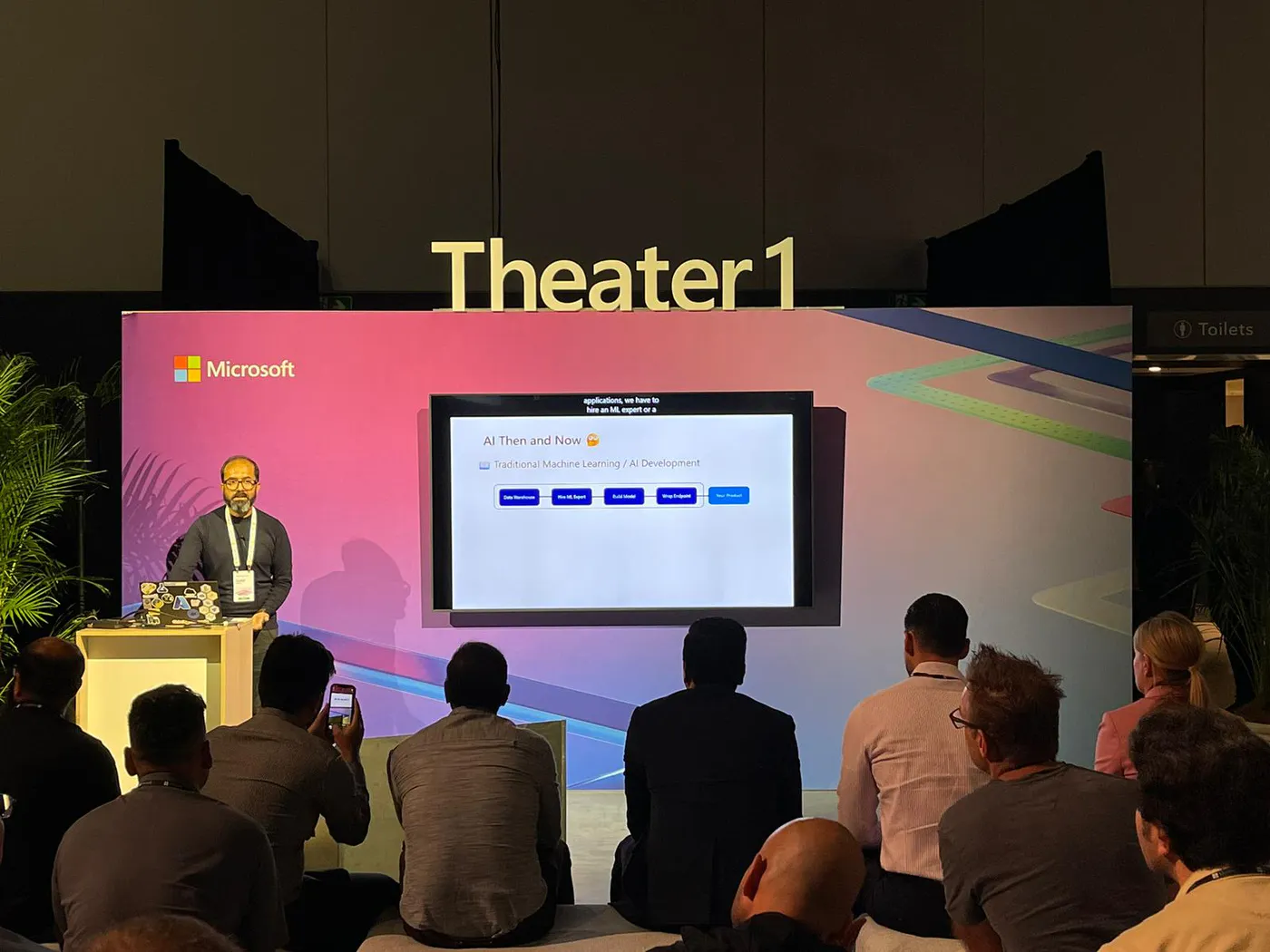
Fedorai founder Arafat Tehsin combines applied AI leadership, solution architecture, enterprise delivery and international speaking. The programme gives leaders enough technical and operating depth to make decisions without turning the day into a product demonstration.
About Arafat and FedoraiIt is designed for leaders, so the focus is decision quality rather than coding. The programme explains the technical concepts required to make sound choices about capability, platforms, data, risk, delivery and operating ownership.
Yes. Private programmes can use the organisation’s strategic priorities, workflows, constraints and candidate use cases where appropriate information can be shared during preparation.
The standard programme builds shared understanding, decision criteria and a practical action plan. A complete enterprise strategy, operating model or investment roadmap usually requires a separate advisory engagement with broader stakeholder and evidence work.
Yes. Governance, accountability, risk tiers, lifecycle controls and applicable organisational obligations are covered at leadership level. The programme is not legal advice and does not replace advice from qualified legal or compliance professionals.
Yes. The depth, language, exercises and duration can be adapted for a board, executive committee, business leadership cohort or a combined business and technology group.
The programme separates baseline evidence, benefit hypotheses, costs, confidence and learning milestones. It encourages small experiments with explicit measures before larger investment or benefit claims are made.