Frame the right agent task
Separate work that benefits from an agent loop from workflows better served by deterministic software, automation or a simpler model call.
Hands-on training for teams designing AI agents that can use context, knowledge and tools without hiding responsibility, risk or system behaviour.
Separate work that benefits from an agent loop from workflows better served by deterministic software, automation or a simpler model call.
Compare managed and code-first harnesses against the team, platform, control and operational needs of the use case.
Connect instructions, context, knowledge, memory, tools, identity and approvals as one testable delivery architecture.
Use representative tasks, traces, graders, red teaming and production signals to decide what the agent can do safely and reliably.
The programme separates the foundations every agent needs from the coordination patterns that become useful in more complex work.
For teams learning the foundations or automating a bounded task with explicit context, tools, permissions and human intervention.
For workflows that need routing, subagents, handoffs or multiple systems while keeping ownership and behaviour observable.
Build agents that use context and tools safely, expose useful traces and remain maintainable after the workshop.
Make sound harness, integration, identity, data, observability and operating-model decisions across agent solutions.
Set realistic autonomy boundaries, quality measures and ownership for agent initiatives before they scale.
The final agenda is matched to the organisation's preferred platform, application stack, data boundaries and intended level of agent autonomy.
Start with the work, decision boundary and measurable outcome rather than the technology label.
Choose a build path that fits the scenario, team and enterprise environment.
Give the agent the right information without creating an uncontrolled data surface.
Connect actions to explicit contracts, credentials and least-privilege controls.
Add specialisation only when it makes the system clearer or more capable.
Create evidence for quality, safety, cost and change before expanding agent responsibility.
Scoping identifies the cohort, scenario, harness options, integration constraints and governance requirements before the exercises are finalised.
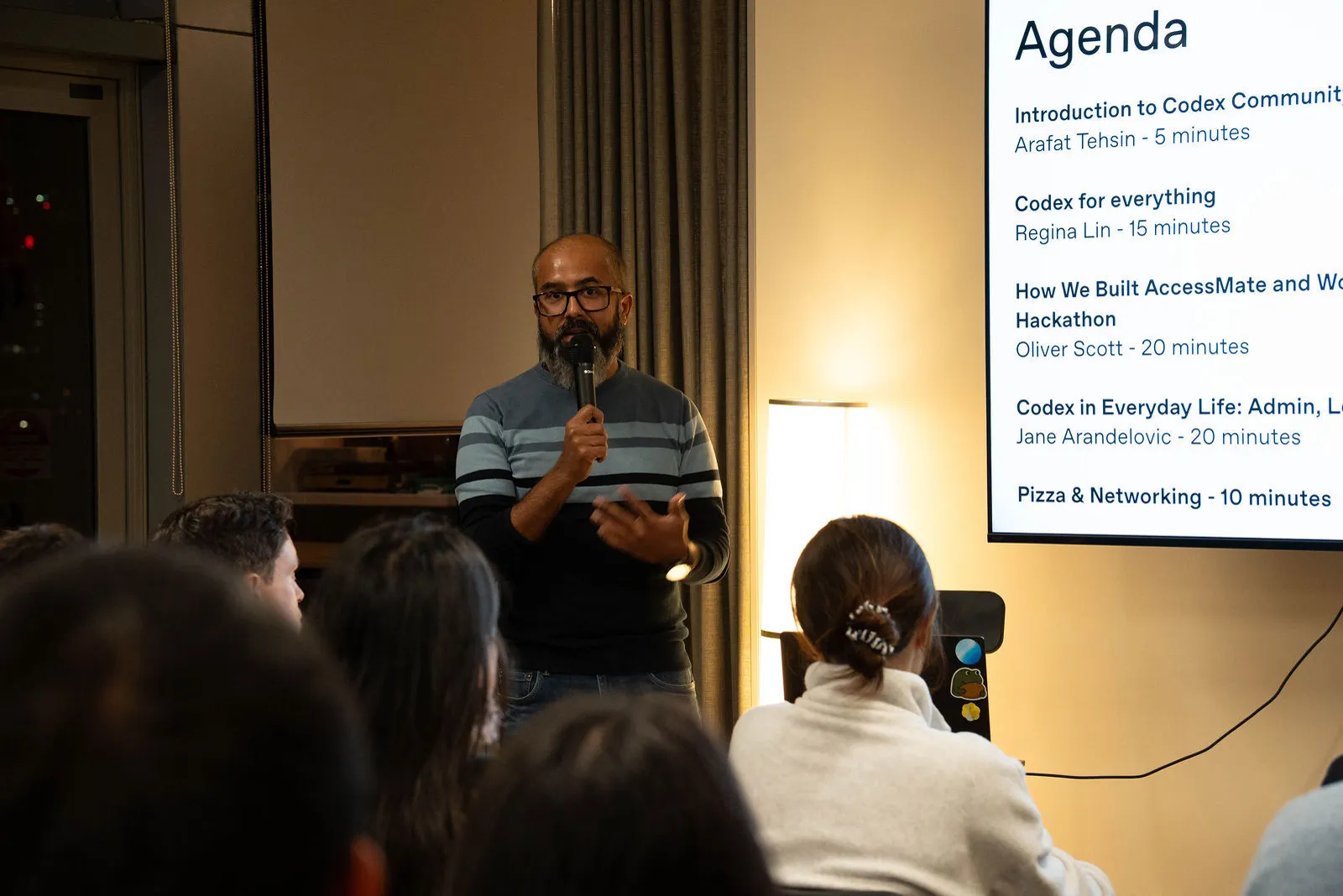
Fedorai founder Arafat Tehsin combines solution architecture, applied AI delivery, community leadership and hands-on training. The programme connects current agent capability to the engineering and operating decisions required for durable enterprise use.
About Arafat and FedoraiThe programme teaches durable architecture and evaluation practices, then uses the harness or framework that best fits the cohort. This can include code-first frameworks, managed agent platforms or a comparison across options agreed during scoping.
Yes. MCP can be covered as one tool-integration pattern alongside direct APIs and platform connectors. The programme focuses on contracts, permissions, identity, failure handling and operational fit rather than treating one protocol as the whole architecture.
No prior agent framework experience is required, but participants should be comfortable with software development, APIs and basic AI application concepts. The technical depth is adjusted to the cohort.
Yes, where access, confidentiality and preparation allow. A private engagement can use a representative workflow, architecture or controlled codebase so that the exercises connect to a real delivery decision.
Yes. Identity, permissions, data boundaries, approvals, traceability, evaluation, red teaming, monitoring and human intervention are integrated into the engineering curriculum.
No. The programme can go deep on a selected platform, but the core architecture covers model, harness, knowledge, tool, identity and operational decisions that teams should understand across providers.